
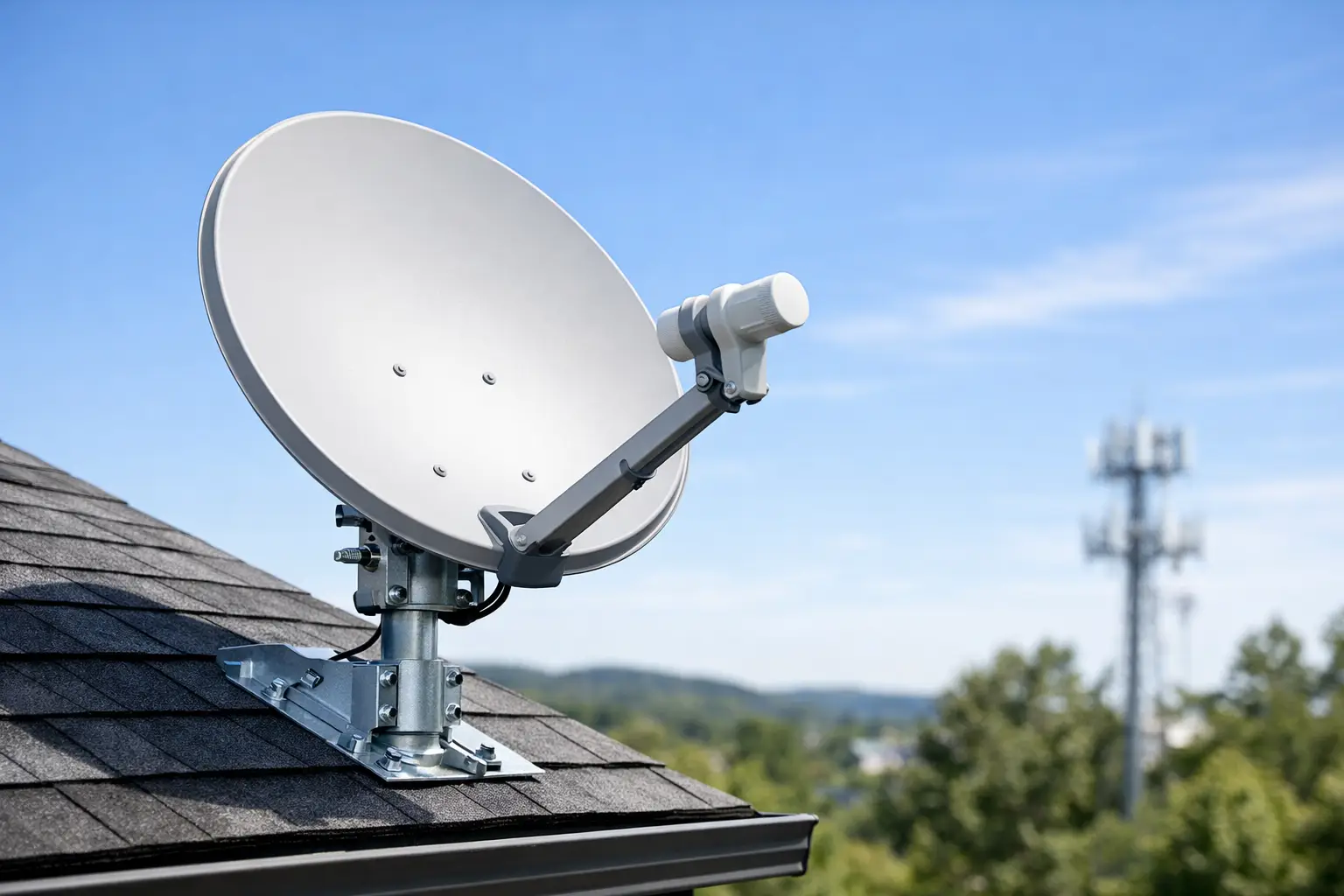
A satellite dish can look perfectly fine from the ground and still be the reason for a frozen picture, missing channels, or a complete “no signal” message. Good satellite installation is not simply a matter of putting a dish on a wall. The dish needs a solid fixing, accurate alignment, weatherproof connections, and a cable route that will not let water or damage into the system six months later.
That is why a quick-looking job can become an expensive repeat visit. A dish mounted to loose brickwork, a cable pinched under a tile, or a connector left exposed to rain may work at first. Then the wind picks up, water gets in, and the faults start.
What a proper satellite installation should include
The right setup starts with the property, not the dish. An engineer should check where the satellite signal can be received without trees, chimneys, neighboring buildings, or future extensions getting in the way. The most obvious wall is not always the best location. A slightly different position can provide a clearer line of sight and make future access safer.
The bracket and fixings matter just as much. Satellite dishes catch the wind, particularly on exposed homes, tall buildings, and properties with open fields nearby. The mounting point needs sound brickwork or a suitable solid surface. Fixing a dish into weak mortar, damaged render, or a loose fascia board is asking for movement later on.
Once mounted, the dish must be aligned accurately for the service you use. There is little margin for error. A picture may appear with a rough alignment on a calm afternoon, yet fail during heavy rain or wind because the signal quality was never strong enough. The aim is not just to get a picture on screen. It is to give the system enough signal margin to cope with normal British weather.
Finally, every outdoor connection needs protecting. Water entering a connector can cause intermittent loss of signal, pixelation, or faults that appear only after rain. A tidy, weatherproof finish is a basic part of a job done properly, not an optional extra.
Satellite installation for the system you actually have
Not every TV service uses the same equipment. Before replacing a dish or adding extra cable runs, it is worth checking what your household is using now and what you expect to use next year.
Sky and Freesat both use a satellite dish, but the required LNB - the unit on the front arm of the dish - can differ. Older Sky systems, Sky Q, and Freesat installations may need different outputs or different LNB types depending on how many rooms, recorders, and receivers are connected. If you want TV in the kitchen, bedroom, garden room, or a converted loft, planning the outputs before the work begins avoids having to replace parts later.
Sky Stream is different. It does not need a satellite dish because it works through broadband. That can be a sensible choice where a dish is not allowed, where a property has no clear satellite view, or where you want to remove an old dish. But it depends on reliable Wi-Fi or a wired network connection. If your internet drops out at the far end of the house, changing from satellite to streaming may swap one frustration for another.
For rural homes, satellite TV can still be a dependable option when broadband is limited. If the wider problem is internet rather than television, Starlink may be worth considering, but that is a separate installation with its own placement and cable-routing requirements.
Why satellite signals fail after a “simple” job
Many callouts start with a dish that was installed by a previous owner, builder, or low-cost contractor. It may have worked for years, but the weak points eventually show themselves. The usual causes are not mysterious: a dish has moved slightly, a cable has perished in sunlight, water has entered a connection, or the LNB has failed.
Wind movement is common. Even a small shift can reduce signal quality enough to affect HD channels first, then the rest of the service when weather conditions worsen. A dish does not have to be hanging off the wall to be out of alignment.
Cabling is another regular culprit. Older coax cable can crack, split, or absorb moisture. Poorly routed cable is vulnerable to ladders, window cleaning, pets, DIY work, and doors closing on it. A good engineer follows the cable from dish to TV equipment rather than guessing and replacing parts that may not be needed.
There is also a difference between a satellite fault and a TV setup fault. A replacement TV may need tuning or configuring correctly. A box may have frozen. An HDMI lead may be loose, or the TV could be set to the wrong input. The quickest fix comes from diagnosing the full chain before going up a ladder.
When repair makes more sense than replacement
A new dish is not always the answer. If the existing bracket is secure, the dish is in good condition, and the cable is healthy, a realignment or LNB replacement may be all that is required. This is often the fairest option for a homeowner who simply wants their service working again.
Replacement is more sensible when the dish is corroded, bent, poorly mounted, repeatedly moved by wind, or no longer supports the number of connections required. It may also be the right time to replace old external cable rather than attach new equipment to a cable that is already failing.
The honest answer depends on what is found on site. You should not be sold a full new system because one connector needs replacing. Equally, patching up a dish that is loose on the wall is false economy. The job should solve the reason the fault happened, not just bring the picture back for the evening.
Planning a tidy installation around your home
Most people do not want cables running across brickwork, draped around window frames, or trailing through a living room. The cable route should be discussed before drilling starts. Sometimes the neatest route takes a little longer, but it protects the cable and makes the finished work look like it belongs on the property.
For a wall-mounted TV, it makes sense to plan satellite feeds, power, HDMI equipment, and network connections together. This is particularly useful during renovations and moves, when walls are open or rooms are being redecorated. Installing the dish first without considering where the TV will sit can leave visible cable later.
Landlords and property managers have another consideration: access and future maintenance. A system that is tucked behind an extension or mounted where it cannot be reached safely may cost more to repair down the line. A practical location with a clear signal and safe access is usually the better long-term choice.
What to expect from a professional visit
A proper visit should begin with the symptom you are seeing, whether that is no signal, channels breaking up, a dish damaged in wind, or a new TV that will not connect to the satellite box. The engineer should test the signal, inspect the dish and cabling, explain the fault in plain language, and give you clear options before carrying out unnecessary work.
At Speedy Aerials, the aim is to diagnose, repair, install, and test the system in one visit wherever possible. Stocked vans help with that, but more importantly, the work should be checked at the TV before the job is considered finished. You should know that the channels work, the recordings work where applicable, and the cables are secure and tidy.
Ask about the warranty as well. A no-nonsense parts-and-labor warranty gives you confidence that the installer stands behind the work. It also encourages the right standard from the start. As the saying goes, “If it is installed properly, I never see the customer again.”
Questions homeowners often ask
Can bad weather stop satellite TV permanently?
Heavy rain can briefly weaken a satellite signal, especially if the dish is only just aligned well enough. It should not cause frequent or long-lasting outages in normal conditions. If your picture regularly fails in moderate rain or wind, the dish alignment, LNB, cable, or connections need checking.
Can one dish feed more than one TV?
Usually, yes, provided the dish has the correct LNB and there are enough separate cable runs for the equipment being used. The right arrangement depends on whether each room needs live TV only, independent channel choice, or recording capability.
Should I remove an old satellite dish?
If it is unused, damaged, or making exterior work difficult, removal can tidy the property and prevent loose hardware becoming a problem. If you may return to satellite TV later, keeping a sound dish and cable route can be useful. It depends on its condition and your plans for the home.
A satellite system should be one less thing to think about when you sit down to watch TV. If the signal is unreliable, do not keep resetting boxes and hoping it settles down. Get the cause checked properly, choose the repair or upgrade that makes sense, and enjoy a picture that stays on when the weather turns.